

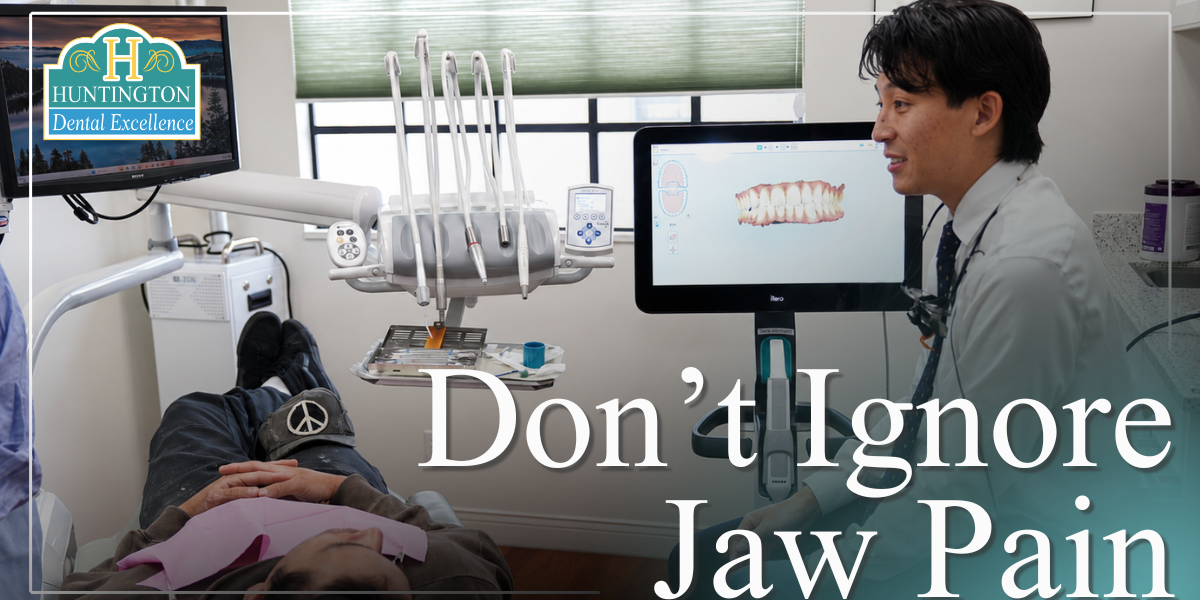
What You Should Know About TMJ Disorders & Chronic Jaw Pain
Jaw pain has a way of slowly becoming part of everyday life. For many people, it begins with subtle symptoms that are easy to dismiss. Maybe your jaw feels tight first thing in the morning, or you notice a clicking sound when you chew. Some patients wake up with headaches and never realize that the discomfort they are feeling may be connected to their jaw joint.
Over time, symptoms become harder to ignore. At Huntington Dental Excellence, we see patients who have been dealing with jaw tension or facial discomfort for months or even years before seeking help.
Understanding TMJ Disorders
The temporomandibular joints, commonly called the TMJ, connect the lower jaw to the skull. These joints work together with muscles, ligaments, and teeth every time you speak, chew, yawn, or swallow. Because the jaw is constantly moving throughout the day, even minor imbalances or strain can create tension and discomfort.
TMJ disorders, also known as TMD, occur when the joints or surrounding muscles are not functioning properly. Symptoms can develop slowly and vary from one person to the next. Some patients notice jaw tenderness or stiffness, while others experience chronic headaches, facial tension, or discomfort near their ears. Clicking, popping, or limited jaw movement are also common.
Why TMJ Symptoms Often Go Unnoticed
One reason TMJ disorders are frequently overlooked is that the symptoms can feel unrelated at first. A patient may assume their headaches are caused by stress or poor sleep. Jaw tightness may seem temporary. Neck soreness or facial tension may come and go throughout the week.
Most patients don’t make the connection between these symptoms and their jaw joint, and many simply adapt to the discomfort. Over time, however, chronic muscle strain and joint tension can begin affecting daily comfort, sleep quality, concentration, eating, and more.
What Causes TMJ Disorders?
TMJ issues are frequently the result of multiple interrelated factors rather than a single, isolated issue. Among the most frequent causes are teeth clenching and grinding, also called bruxism. Many patients are unaware that they are grinding their teeth as they sleep. Night after night, the jaw muscles and joints are severely strained by this constant pressure.
Stress is also a significant contributing factor for TMD sufferers. Patients frequently unconsciously tense their jaw muscles during stressful moments. Bite imbalance, jaw injuries, arthritis, or overuse-related muscular tension are also possible contributors.
How TMJ Disorders Are Diagnosed
At Huntington Dental Excellence, we take a comprehensive approach to evaluating jaw discomfort because every patient’s situation is different. Talking about your symptoms, medical history, and daily routines is the first step in diagnosing TMJ issues. To check for stress or imbalance, we will examine the jaw joints, surrounding muscles, bite alignment, and general jaw function. To assess the joints more thoroughly and rule out other issues, digital imaging or other diagnostic tests may be recommended in some circumstances. After enduring agony for a long time, many patients find relief in simply knowing what’s causing their symptoms.
Conservative Treatment Options
The fact that TMJ treatment starts conservatively is among the most comforting things patients discover. Treatment focuses on reducing muscle strain, protecting teeth, and gradually improving jaw comfort, depending on the origin and severity of symptoms. A custom nightguard can help some TMD sufferers feel less pressure from clenching and grinding at night. Others might benefit from jaw exercises, bite modification, stress-reduction techniques, or guidance on reducing joint and muscle strain. The objective is to enhance long-term comfort and jaw function whenever feasible rather than merely managing symptoms temporarily.
Early Treatment Matters
Long-term stress on the teeth and jaw joints may result from persistent grinding, tense muscles, and an unbalanced bite if therapy is not received. Over time, this can lead to worn teeth, frequent migraines, painful chewing, and restricted jaw movement. Early symptom management can help patients avoid more serious issues down the road.
Improving Comfort & Quality of Life
TMJ issues impact more than just the jaw and in ways that many patients are unaware of until their symptoms start to improve. Chronic tension can affect sleep quality, energy levels, focus, and general everyday comfort.
At Huntington Dental Excellence, we think patients should receive individualized treatment that prioritizes comfort and long-term dental health. We invite you to schedule an appointment at our office located in South Pasadena, CA to learn more about what could be causing your symptoms and how to relieve them.