
What Do I Do If I Damage My Dentures

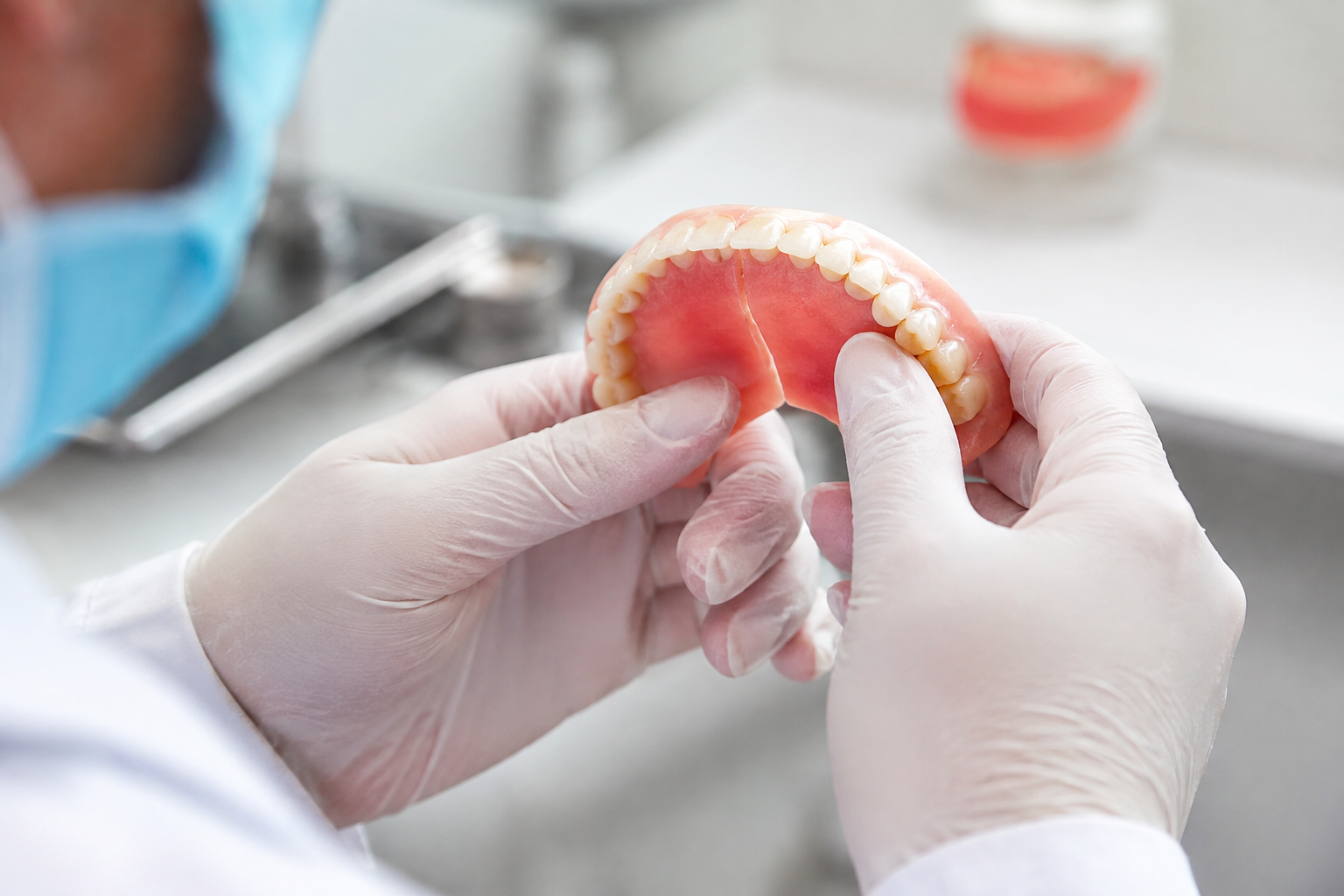
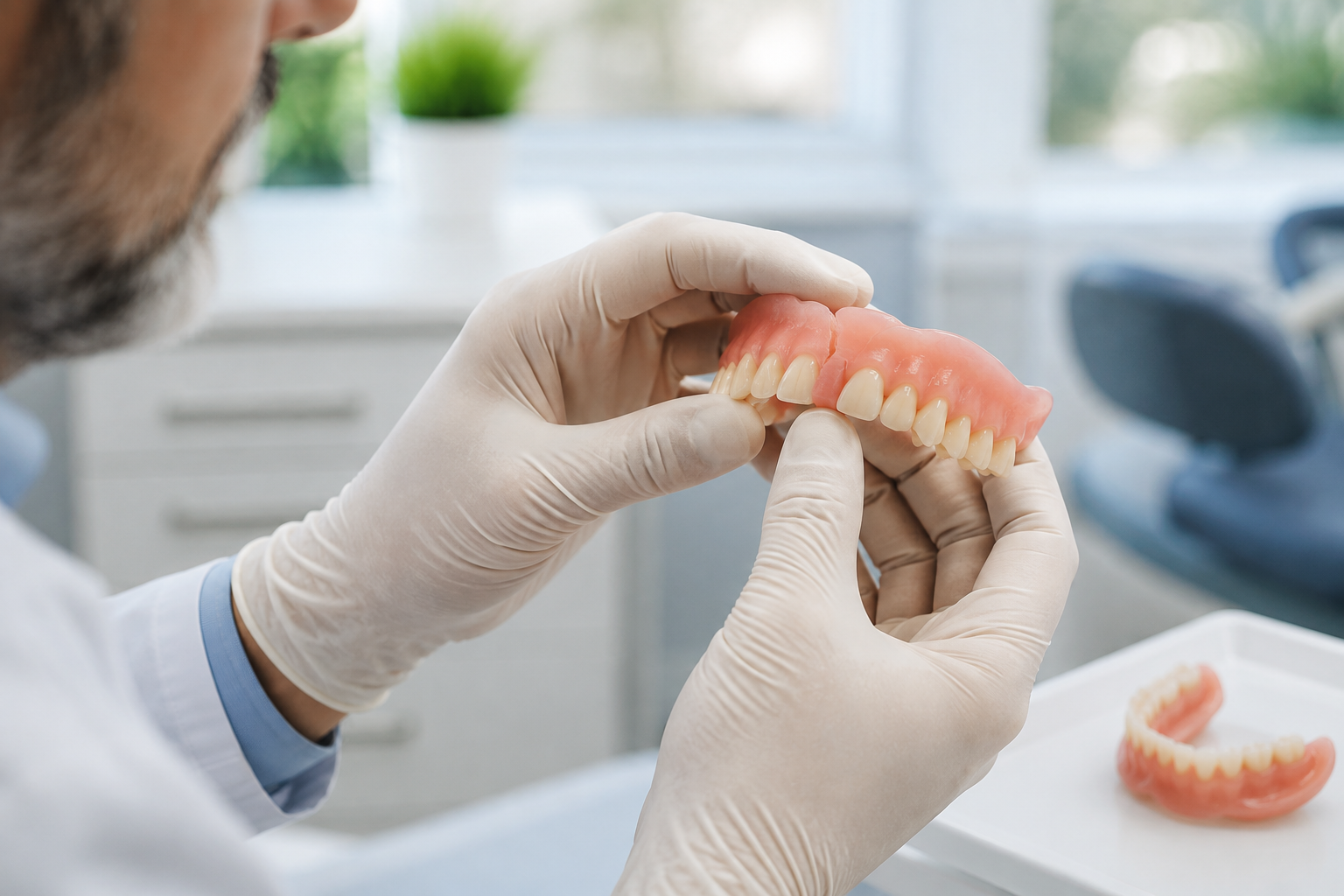
Dentures are designed to withstand everyday use, but they can still become chipped, cracked, or broken if they are dropped or subjected to excessive force. When damage occurs, it is important to have your dentures evaluated promptly so they can be repaired correctly and continue to fit comfortably and function as intended.

Huntington Dental Excellence provides denture repair and ongoing denture care for patients in South Pasadena and the surrounding area. Whether your dentures have been damaged in an accident or no longer fit as comfortably as they once did, our team can evaluate the problem and recommend the most appropriate solution. If your dentures have been damaged, call us at (626) 427-0085.
REQUEST AN APPOINTMENT

How Dentures Can Become Damaged

Even with proper care, dentures experience normal wear over time. As your jawbone and gums naturally change, dentures may no longer fit as securely as they once did. A poor fit can place uneven pressure on the denture during everyday activities such as chewing, increasing the likelihood of cracks, fractures, or other damage.

Accidents are another common cause of denture damage. Dropping your dentures, biting into very hard foods, or exposing them to excessive force can cause them to chip or break. According to the American Dental Association dentures that become damaged or no longer fit properly should be evaluated by a dental professional. If your dentures become loose and require increasing amounts of adhesive to stay in place, it is time to have the fit checked rather than relying on additional adhesive. Prompt attention can often prevent further damage and help keep your dentures comfortable and functional.

“As your jawbone and gums naturally change, dentures may no longer fit as securely as they once did.”

“Developing good daily habits helps protect your dentures from unnecessary wear and damage while supporting your overall oral health.”

Tips for Caring for Your Dentures

With the right care, dentures can provide years of comfortable, dependable function. Developing good daily habits helps protect your dentures from unnecessary wear and damage while supporting your overall oral health. We recommend the following best practices:

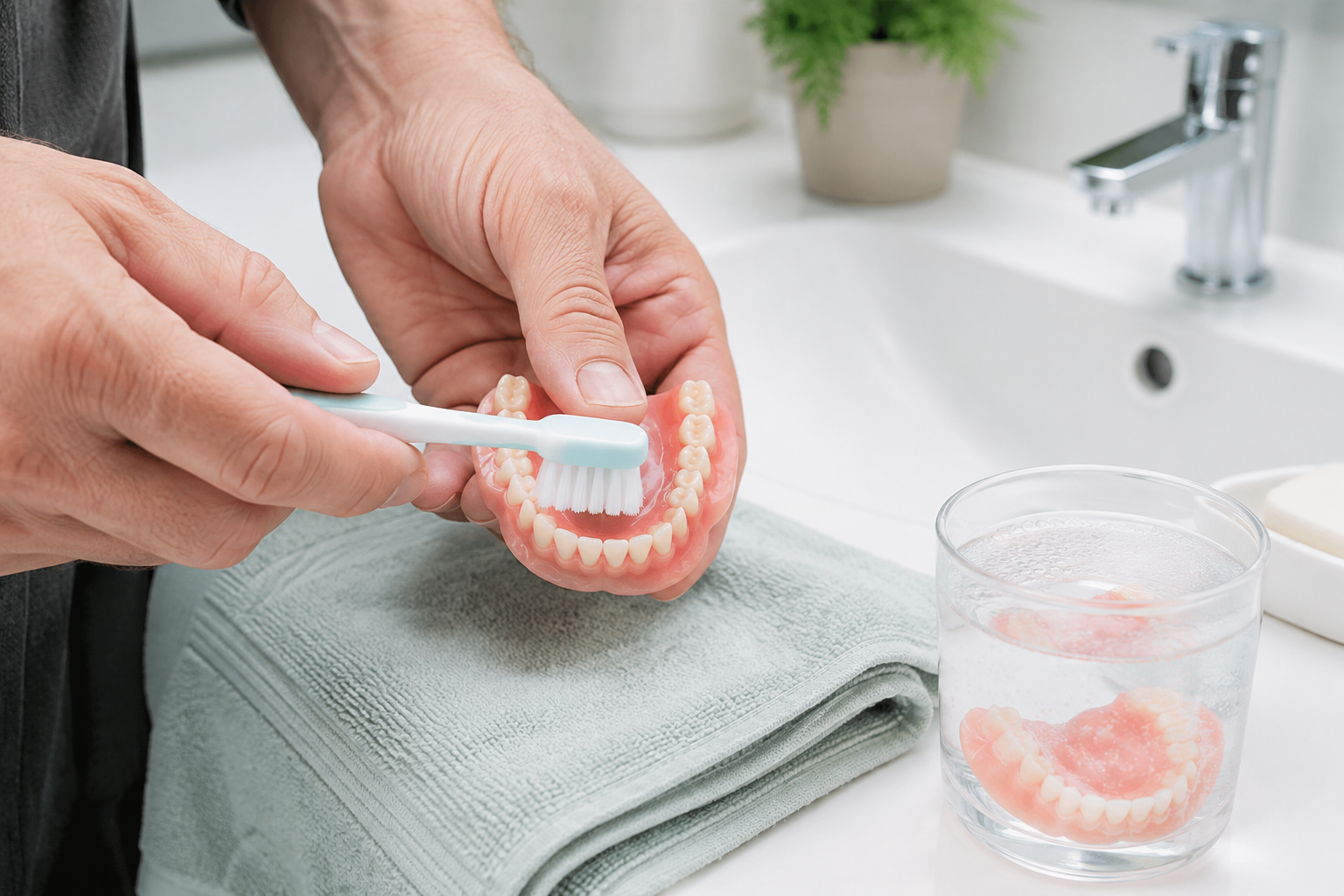
  • Handle your dentures carefully. When cleaning them, hold them over a folded towel or a sink partially filled with water to help cushion them if they are accidentally dropped.
  • Clean your dentures every day using a soft denture brush and cleaning products recommended for dentures. Before replacing them, gently brush your gums, tongue, and the roof of your mouth to help remove plaque and stimulate healthy tissues.
  • Keep your dentures moist when they are not being worn. Soak them overnight in water or a denture-cleaning solution, depending on your dentist’s recommendations.
  • Never use hot or boiling water to clean your dentures, as excessive heat can warp the material and affect the fit.
  • If denture adhesive has been recommended, use it only as directed. If your dentures begin to feel loose, schedule an appointment so we can evaluate the fit rather than relying on additional adhesive.
  • Keep your dentures out of reach of children and pets, and have them adjusted promptly if they no longer fit comfortably. Properly fitting dentures are more comfortable, more stable, and less likely to become damaged.

Common Causes of Denture Damage

Accidental drops are one of the most common reasons dentures become chipped or broken. When removing or cleaning your dentures, it is a good idea to do so over a folded towel or a sink partially filled with water to help cushion them if they slip from your hands. Biting into very hard foods or using dentures in ways they were not designed for can also increase the risk of damage.

Daily cleaning habits also play an important role in protecting your dentures. According to research published in the Journal of Prosthetic Dentistry certain cleaning products, including bleach, alcohol-based mouthwash, and regular toothpaste, can damage denture materials over time. Using products specifically designed for dentures and following the care instructions provided by our team can help keep your dentures looking and functioning their best for years to come.

“Daily cleaning habits also play an important role in protecting your dentures. “

“The American College of Prosthodontists does not recommend home repair kits for denture repair.”

Can You Repair Dentures at Home?

Although it may be tempting to repair damaged dentures yourself, most dentists recommend leaving repairs to a dental professional. Do-it-yourself repairs can make the damage worse, affect the fit of your dentures, or expose your mouth to materials that are not intended for long-term use. If your dentures become damaged, contact our office as soon as possible. We can advise you on the best way to protect them until you can be seen.

The American College of Prosthodontists also advises against relying on home denture repair kits as a permanent solution. If a temporary repair product is used, it should be specifically intended for dental use and only as a short-term measure. Even then, it is important to schedule an appointment promptly so we can evaluate your dentures, complete any necessary repairs, and ensure they continue to fit comfortably and function properly.

Frequently Asked Questions

Q. Can I use glue for fixing dentures?

A. Dentists caution against using superglue to repair a break. This material is not intended for use on anything that goes in the mouth. The chemicals in it can cause toxic reactions. In addition, it can be difficult to remove and may prevent a dentist from making proper repairs.

Q. Is it better to see a dentist about fixing dentures or get a new set?

A. The answer depends on the type of damage and the age of your dentures. Most dentures last between five and 10 years with proper care. If a denture is at the end of its lifespan, it can make sense to get a replacement. Likewise, a high level of damage may not be worth repairing.

Q. What are some ways to reduce the risk of damaging my dentures?

A. Proper care can help you wear your dentures comfortably for the maximum possible time. Reduce the risk of cracks and other impact damage by only handling the dentures over a soft surface such as a towel. Following your dentist’s care and cleaning instructions can help avoid cracks and abrasions.

Q. What happens if I keep wearing damaged dentures?

A. Damaged dentures tend to cause a bad fit. Continuing to wear ill-fitting dentures instead of fixing them can lead to problems such as gum pain, irritation, sores, and even infection. Poor placement can also affect the ability to chew food, resulting in digestive issues.

Q. Can all types of damage to dentures be fixed, or will I need a replacement?

A. Many types of damage can be repaired. If the damage affects a specific tooth replacement or only the base of the dentures, it may be possible to replace just the affected part. Your dentist will inspect the dentures and make an appropriate recommendation.

Q. Is there a way to completely prevent damage to dentures?

A. Even with careful maintenance, dentures do not last forever. Your dentist will give you care instructions to help you extend the life of your dentures as thoroughly as possible. Be sure to follow your dentist’s advice on how to safely clean dentures, such as avoiding abrasive cleaning material and whitening toothpaste, bleach-containing products, and hot water that could warp your dentures.

Denture Terminology

Alveolar Bone

The alveolar bone is the bone surrounding the root of the tooth that keeps the tooth in place.

Clasp

A clasp is a device that holds a removable partial denture prosthesis to the teeth.

Denture Base

The denture base is the part of the denture that connects the artificial teeth with the soft tissue of the gums.

Edentulous

Edentulous is a term that applies to people who do not have any teeth.

Periodontal Disease

Periodontal disease is a condition that causes inflammation of the gingival tissues and membrane of the teeth, leading to tooth loss without professional treatment.

Pontic

Pontic is another term for an artificial tooth on a fixed partial denture.

Rebase

Rebase is the process of refitting denture prosthesis by replacing the base material.

Reline

Reline is when a professional resurfaces the surface of the prosthesis with a new base material.

Resin/Acrylic

Resin and Acrylic are resinous materials that can be components in a denture base.

Stomatitis

Stomatitis is the inflammation of the tissue that is underlying a denture that does not fit properly. It can also result from other oral health factors.

A South Pasadena Team Is Ready to Help with Denture Care

Damaged dentures only get worse with time. Only a dental professional can address these problems. Take care of your oral health needs. Call us at (626) 427-0085 for an appointment to fix your dentures or get an adjustment for a better fit.

Helpful Related Links

American Dental Association (ADA)
American Academy of Cosmetic Dentistry® (AACD)

About our business

Huntington Dental Excellence

  • Huntington Dental Excellence was established in 1987.
  • We accept the following payment methods: American Express, Cash, Check, Discover, MasterCard, and Visa
  • We serve patients from the following counties: Los Angeles County
  • We serve patients from the following cities: South Pasadena, Pasadena, Alhambra, Monterey Park, Highland Park, San Gabriel, San Marino, Rosemead, Altadena, Temple City and Los Angeles
  • CA (License #35999). View License Information and Specifics
  • National Provider Identifier Database (1194877746). View NPI Registry Information

Discover A Different Kind Of Dental Experience